
Thailand Has Two Different Visas for Remote Workers in 2026

Thailand’s Destination Thailand Visa needs 500,000 THB in savings. The Long-Term Resident visa needs USD 80,000 annual income. Here is exactly what each covers, who qualifies, and how to apply in 2026.
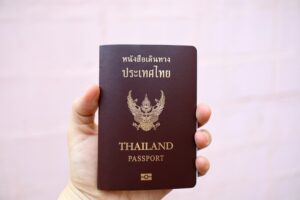
Thailand Has Two Different Visas for Remote Workers in 2026. Here Is the Honest Comparison So You Apply for the Right One
Bangkok is consistently listed as one of the top digital nomad cities in the world, and for good reason. Fast internet, world-class street food, modern coworking spaces, hospitals ranked among the best in Southeast Asia, and a cost of living that is a fraction of European capitals. For anyone who works remotely and has the flexibility to choose where they live, Thailand has been on the radar for years.
What changed in 2024 and has been refined through 2025 and into 2026 is the legal side. For a long time, remote workers in Thailand existed in a grey zone, technically on tourist visas but technically working, which violated the conditions of those visas even if no Thai employer or client was involved. Thailand has now created two distinct legal pathways that allow remote workers to live and work from the country properly.
The two pathways are the Destination Thailand Visa, known as the DTV, and the Long-Term Resident Visa, known as the LTR. They serve different income levels, different work situations, and different goals. Getting them confused is one of the most common mistakes applicants make. This guide explains both clearly, the requirements, the benefits, the costs, and the real differences, so you can decide which one actually fits you.
The Destination Thailand Visa: The Accessible Option for Most Remote Workers
Thailand’s Ministry of Foreign Affairs officially launched the DTV in July 2024, and it has quickly become the most talked-about option for freelancers, remote employees, and online business owners who want to live in Thailand legally.
The DTV is a five-year, multiple-entry visa. Each entry allows you to stay in Thailand for up to 180 days, and you can extend each 180-day stay by an additional 180 days at a local Thai immigration office for a fee of 1,900 THB, which is approximately 55 US dollars. This means in practice you can stay in Thailand almost continuously for years if you choose to, making it one of the more flexible long-stay structures available anywhere in Southeast Asia.
Who is it for: remote employees working for companies registered outside Thailand, freelancers with overseas clients, and self-employed online business owners whose income source is outside the country. There is also a cultural activities track for people enrolled in programs like Muay Thai training or Thai culinary courses for at least six months, though this track has been deprioritized in 2026 for the full five-year visa, with shorter courses increasingly pushed toward standard education visas instead.
The financial requirement is the most talked-about aspect of the DTV, and it is importantly different from many other nomad visas that require monthly income proof. Thailand asks for proof of savings rather than income. Specifically, you need to show 500,000 Thai Baht in a bank account, which is approximately 14,500 US dollars or about 13,500 euros at mid-2026 rates. This needs to be demonstrated through bank statements covering the last three months. Some embassies and consulates may ask for additional documentation, so checking the specific requirements of the Thai mission where you intend to apply is important.
Beyond the savings proof, you need a valid passport with at least six months of remaining validity, evidence of your remote work arrangement, whether that is an employment contract with a foreign company, client contracts if you are freelance, or documentation of your overseas business ownership, and comprehensive health insurance with a minimum coverage of at least 50,000 US dollars valid for your stay in Thailand.
The application fee is 10,000 THB, approximately 300 US dollars, and processing typically takes two to four weeks depending on documentation completeness and the specific embassy. One important 2026 update: you cannot apply for the DTV while physically inside Thailand. The system now flags applications submitted from inside the country. You must apply at a Royal Thai Embassy or Consulate in another country, or through the official Thailand e-Visa portal, before you travel.
A practical restriction that is worth being clear about: the DTV explicitly does not permit you to work for Thai companies or Thai clients. Your income must come from outside Thailand. This is an immigration rule and a 2026 digital audit mechanism called TDAC actively cross-references bank accounts and visa types, so receiving consulting fees or payments from Thai-registered businesses while on a DTV is a genuine compliance risk.
Tax Considerations on the DTV
This is where things get complicated and where getting proper advice before moving matters more than most online guides acknowledge.
From January 1, 2024, Thailand updated its foreign income remittance rules. Income you bring into Thailand from abroad can be taxable if you are considered a Thai tax resident, which happens once you spend 180 days or more in a calendar year in Thailand. Before this change, income earned in previous years and brought in later was generally exempt, but the new framework eliminates that prior-year exemption for income earned from 2024 onward.
A new 2026 rule provides some relief: foreign income remitted to Thailand is only taxable if it exceeds 10 million Thai Baht, which is approximately 290,000 US dollars annually. For most digital nomads, this threshold is high enough that Thai income tax liability from foreign remittances remains minimal. Thailand also has double taxation agreements with over 60 countries, which can further reduce or eliminate liability depending on your nationality and the nature of your income.
However, Thai tax rules are genuinely complex and the specific interaction of the DTV, the 180-day threshold, the 2026 remittance thresholds, and your home country’s tax treaty with Thailand all affect what you actually owe. Consulting a tax professional who specializes in Thai expat taxation before you move is the responsible approach rather than relying on simplified summaries.
The Long-Term Resident Visa: For Higher-Income Professionals and Established Remote Workers
The LTR Visa is Thailand’s premium long-stay offering, launched through Thailand’s Board of Investment as a ten-year visa structured as a five-year permit renewable for a further five years. It was designed to attract wealthy individuals, retirees, senior professionals, and remote workers employed by well-established multinational companies.
For remote workers, the relevant category is Work-from-Thailand Professionals. The income requirements here are substantially higher than the DTV. To qualify, you need a personal annual income of at least 80,000 US dollars for each of the past two years. If your income is between 40,000 and 80,000 US dollars annually, you can still qualify under certain conditions: you need either a master’s degree or higher, ownership of intellectual property, or professional credentials in fields recognized as target sectors by the Thai BOI. Additionally, your employer must be a company that has been operating for at least three years and has combined global revenue of at least 150 million US dollars or equivalent. For self-employed or freelance applicants, demonstrating the income threshold with appropriate documentation may be sufficient even without the employer revenue requirement in some cases.
Health insurance is required with a minimum of 50,000 US dollars of coverage. You also need at least five years of professional work experience in a field relevant to your current employment documented within the last ten years.
Beyond eligibility, the LTR Visa offers benefits that make the higher bar genuinely worthwhile for those who clear it. The most financially significant is the tax treatment: foreign income remitted to Thailand is entirely tax-exempt for LTR holders under a specific provision that applies separately from the general remittance rules. Additionally, LTR holders in the Highly Skilled Professionals category, which requires employment by a Thai entity in a priority sector, qualify for a flat 17 percent personal income tax rate, which is substantially lower than Thailand’s standard progressive rate of up to 35 percent.
Beyond tax, the LTR Visa provides a digital work permit, which is included in the visa package and does not require a separate application. It also provides fast-track airport immigration services at major international airports, a relaxed reporting requirement of once per year rather than the standard 90-day immigration report, and the right to include your spouse and children under 20 as dependants on the same visa.
Applications for the LTR go through Thailand’s Board of Investment. Processing takes approximately two to three months from submission of a complete application package. Once approved, you receive a letter of endorsement from the BOI, which you then take to a Thai embassy or immigration checkpoint to receive the actual visa sticker.
DTV vs LTR: Which One Is Actually Right for You
The clearest way to think about this is by income and employment situation.
If you earn under 40,000 US dollars a year from remote work or freelancing, the DTV is your only realistic option between the two. The 500,000 THB savings requirement is accessible to most established freelancers and remote workers, and the visa delivers what most digital nomads actually need: long-term legal status, multiple entries, and the freedom to leave and return without starting over.
If you earn 40,000 to 80,000 US dollars annually and hold a master’s degree or have documented expertise in a recognized field, you may qualify for the LTR Work-from-Thailand Professionals track under the reduced income pathway with educational or professional credentials as supporting documentation.
If you earn above 80,000 US dollars annually and work for an established multinational with three or more years of operating history and at least 150 million US dollars in revenue, the LTR is worth the additional complexity for the tax benefits alone. For someone at that income level, the tax-exemption on foreign income remittances and the flat rate option for Thai-source income can represent significant annual savings that more than offset the visa fee and application effort.
The LTR also suits professionals who plan to stay in Thailand for an extended period and want the administrative simplicity of reporting once a year rather than managing 180-day entry windows and extensions.
The DTV suits freelancers, independent contractors, online business owners, and remote employees at mid-income levels who want long-term flexibility without the complexity or income threshold of the LTR.
What Life as a Remote Worker in Thailand Actually Looks Like
Bangkok is the largest and most internationally connected base, with the most extensive coworking space infrastructure, the broadest professional community, and the easiest access to visas, government services, and international flights. The BTS Skytrain and MRT metro make navigation practical, and neighborhoods like Thonglor, Ekkamai, and Ari are consistently cited as the best areas for remote workers balancing work infrastructure, lifestyle, and reliable internet.
Chiang Mai in the north is the lower-cost alternative, with a large and well-established digital nomad community, excellent coworking spaces, and a pace of life that many people prefer for focused work rather than the intensity of Bangkok. Internet quality in central Chiang Mai is generally reliable, though connectivity outside the city center can be more variable.
Phuket and other coastal areas attract remote workers who want beach access alongside workability, but internet reliability and coworking infrastructure are more variable than in the two cities, and costs in tourist-heavy areas can approach Bangkok prices during peak season.
Healthcare in Thailand is a genuine asset for long-term remote workers. Several hospitals in Bangkok, including Bumrungrad International, Bangkok Hospital, and Samitivej, are internationally accredited and widely used by expatriates and long-term residents. Medical costs are significantly lower than in most Western countries, and the combination of quality and affordability makes Thailand one of the more practical long-stay destinations for people who factor healthcare seriously into their decision.
Official Resources
~ Official Royal Thai Embassy information on the Destination Thailand Visa: thaiembassy.com/thailand-visa/dtv-visa-thailand
~ Thailand Board of Investment LTR Visa official portal: ltr.boi.go.th
~ Thailand Immigration official website: immigration.go.th
~ Thailand e-Visa portal for DTV online applications: thaievisa.go.th
Final Word
Thailand’s legal framework for remote workers has matured significantly since 2024, and both the DTV and the LTR are genuine, functional pathways that allow you to live there properly rather than cycling through tourist visas every 30 to 60 days. The DTV is the right starting point for most mid-income remote workers and freelancers. The LTR is the better option for higher earners who want tax efficiency and a ten-year horizon. Pick the one that actually fits your financial situation, apply before you travel rather than after, and get clear on the tax implications for your nationality before you move. Thailand rewards that kind of preparation with a genuinely exceptional base for remote work.
